Monday, 6 October 2014

Research into Sound - Ms Miller


I will be researching the use of sound in Thriller films and how it is used for the desired effect. The use of sound is important in films as it makes it easier to understand what is happening as well as help provoke a response from the audience. In thriller films sound is used to build tension and suspense as well as allowing the audience to connect with the characters. The film I have chosen to analyse is The Silence of the Lambs. I chose this as it is the highest grossing thriller film of all time.


Most of music in this scene is actually diegetic or on screen sound as at the start of the scene we see a cassette player playing music cassette player.
This is uncommon but is used to create the contrapuntal sound effect which features near the end of the scene. Throughout the scene music is used to mirror Hannibal's mental state. The music playing from the cassette player is classical which usually indicates calmness and relaxation and matches how Hannibal is feeling at the start of the scene. When Hannibal attacks the prison guards the music changes and becomes louder and faster paced. This illustrates the adrenaline rush Hannibal is feeling as he fights to win his freedom. The increased tempo mirrors Hannibal's increased heart rate. When both guards are dead the music goes back to the calm classical music while we see the guards dead and bloody on the floor, this is the contrapuntal sound effect. The calm relaxing music juxtaposes the brutal sight of the murdered guards. The music mirrors how calm and relaxed Hannibal feels now he is free. This juxtaposition is used to trivialise the brutal deaths and show how murder is normal to Hannibal and even something he enjoys. This shows the audience how sick and twisted he is. The audience see for themselves how cold and emotionless he is and are left in awe. During the attack when the music suddenly increases in tempo it also gives the audience a rush of adrenaline and even excitement.  It is normal for thriller films to present the antagonist as cold and emotionless as it makes them more fearful as the audience are left on edge knowing that the antagonist has no morals or ethics and would have no qualms harming the films protagonist the audience is usually made to care for.

The on screen sound is used to great effect in this scene. All the sounds relating to Hannibal's attacks on the officers are emphasised. We clearly hear the sounds of Hannibal using his mouth to tear one of the guards flesh, the sound of the pepper spray being sprayed into his eyes as well as the thuds from him being beaten with the baton. These exaggerated sounds are used to emphasize the damage and harm Hannibal is doing to these guards.This makes the audience feel uneasy as they are forced to imagine how much damage is being done and how much pain these guards must be suffering. This is typical for thriller films as the antagonist is usually much more powerful than all the characters besides the main protagonist and the emphasis on the damage they cause is used to show the audience how powerful the antagonist is.

The diegetic sound including the dialogue and the screams of the guards are used for a similar effect. At the start of the scene the dialogue between the guards is used to show their relationship with Hannibal and how they feel about him. We see that they consider him a "son of a bitch" but their laughter suggests that they don't see him as any kind of threat. Their underestimation is used to show that Hannibal is much stronger than he looks making him seem more powerful as the audience see that he is much stronger than people who don't even consider him a threat. When they are attacked both guards are constantly screaming in pain which like the on screen sound makes the audience feel sorry for them as they hear how much pain Hannibal is causing. The audience fear Hannibal which is typical for thrillers as they usually attempt to make the antagonist appear as powerful making the audience uneasy as they think the antagonist may be powerful enough to succeed in their plans.

To conclude I think the film was successful in it's attempts to create shock and make the antagonist seem powerful. My research taught me the large effect sound can have on the audience and how engaged they are with the film. I learnt how dialogue can be used to show the relationship between various characters and how certain sounds can be exaggerated to make the antagonist appear more powerful. When creating my own thriller film I may emphasise the sounds of a certain characters pain to make my own audience sympathise them and feel hatred towards my antagonist. I learnt that sound plays an important part in the creation of a successful thriller film.


Monday, 29 September 2014

Research into editing styles


Editing is one of the most important parts of film making. It plays a big part in creating the surprise, shock and suspense that thrillers are known for. The clip I have analysed is from The Human Centipede, it shows a girl attempting to escape from the antagonist in a very suspenseful scene.
Shot Reverse Shot - This occurs near the start of the scene where the sequence cuts betweens the females facial expressions, it makes it obvious that they have both just woken up and shows how they share the same fear and are both just as confused. We see both characters squirming trying to escape and the audience can see how panicked they are. The audience sympathise with them and hope they are both able to escape. This is typical for a thriller as females are often in danger and the antagonist is usually male and presented as more powerful. Shot reverse shots are a common way to show which character feels like they are in control of the situation.

Reaction Shot - A reaction shot is used after one of the females gets injected with chemicals. We see her crying about wanting her mother. This shot is used to show how much pain she is in and the fact that she is being tortured. This makes the audience think about how horrible it must be to end up in that kind of situation and we sympathise with her, afterwards we see that the other female is trying to escape and the audience are in suspense and hope that the same thing doesn't happen to the second female. It becomes even more important that she escapes. Females attempting to escape from the antagonist is common in thriller films even though they rarely succeed in escaping. Reaction shots are a common way of showing how much pain and fear the antagonist is capable of causing.

The Timing of Shots is a very important part of editing. After one of the females escapes from the bed the editing becomes faster paced as she tries to run away. The faster pace of the shots allow the audience to feel the adrenaline she must be feeling as she tries desperately to escape, the audience share her fear and panic and hope she is able to get away. When she stops running and locks herself in a room the editing slows down again creating suspense. It is conventional for thriller films to use the timing of shots to control the pace of the film which allows them to stop it becoming boring and stale as well as allowing the film to go from slow, tension building scenes to fast paced adrenaline-inducing scenes.

After showing how scared she is inside the room we get a Jump Cut to the antagonist outside the room. This quick change is used to juxtapose the different characters body language and there is a large contrast between the woman inside who is trembling in fear to the antagonist who appears angry and menacing. This shows the audience how the antagonist is much more powerful than the female and makes the audience fear for her safety. This is conventional for thrillers as the more powerful they can make the antagonist appear the more the audience get invested in the film as they worry more for other characters and hope the villain can be stopped. 

My research will help me plan my own thriller as I have learnt how I can change the timing of shots to create either tension or adrenaline. I also learnt that jump cuts can be used to juxtapose the body language between several characters and I may be able to use this in my own thriller to make the antagonist appear more powerful.

Research into Cinematography


Cinematography is the art of capturing and putting together different shots and frames. It includes the shot types, camera movement, camera focus, lighting and much more.Good use of cinematography can make a film more engaging and suspenseful. The scene I analysed is from the film Se7en, a psychological thriller directed by David Fincher. I chose this scene as cinematography is used to create suspense as well as shock and surprise the audience.


Near the start of the scene a point of view (POV) shot is used. The shot is from the point of view of one of the policemen aiming his gun at the person underneath the bedsheets. This shot creates suspense as the audience is put in the same scary situation as the character and is made to feel his unease as they are just as in the dark as he is. This is a common way for thriller films to slowly build suspense right before something dramatic happens, like in this scene where the man under the bedsheet suddenly starts moving and then dies.


Here the camera slowly zooms in on the writing on the wall. This is to draw the readers attention to it as "sloth" is one of the seven deadly sins and a key plot element in the film. The audience read this and feel uneasy and are made to wonder about the mental state of the antagonist and how evil he is. This is typical for a psychological thriller as the plot often revolves around something of an eerie nature and the antagonists are usually portrayed as crazy and cruel.

Here shallow focus is used to highlight Detective Mills facial expressions, Detective Somerset is blurred in the background. This occurs while they are investigating the scene and shows how Mills is deep in thought. The film has mystery elements and this shot is used to tell the audience that these two characters are the protagonists and that it is their responsibility to catch whoever is responsible for these crimes. Thriller films often have mystery elements to keep the film suspenseful throughout.


Here a reaction shot is used to show the fear on the characters after discovering the body was still alive. This succeeds in surprising the audience which all thrillers aim to do. It succeeds in this because as the body had been shown previously and was completely still, leading the audience and on-screen characters to believe that the person was already dead. When it starts moving the characters and the audience share the same surprise. A technique like this is conventional to the genre as jump scares and surprises increase adrenaline and stop the film from getting boring.


Here we have a high angle shot of the body recently discovered to still be alive. Here the high angle shot is used to show the horrible state the body is in increasing the audiences shock at the fact that the body is still alive. We get to see how the body is bruised, discoloured and mutilated making the antagonist more fearful as we think about how cruel and messed up he must be to do this to someone.

When making my own thriller film I will be sure to follow these conventions to make it scary and suspenseful. During my research I learned how I could use zoom to bring the audience's attention to key plot details and how I can use point of view shots in order to make my characters more relatable. I have also decided that I will include a reaction shot in my sequence to show the victims sudden fear when she sees the antagonist for the first time. This will change the tempo of the scene and will create a sense of fear and panic.

Sunday, 28 September 2014

Research into mise-en-scene


Mise-en-scene refers to everything that appears before the camera and it's arrangement including composition, sets, props, actors, costumes and lighting. Clever use of mise-en-scene can make the film more immersive and suspensful.


Setting, Iconography & Lighting

The scene is set out in the middle of nowhere near a long stretch of road. The background is never in focus throughout the whole scene and the whole scene is brightly lit. This allows the focus to always be on the various characters in the scene and always show their facial expressions. This film is a psychological thriller so it's important that the audience know how the characters are feeling throughout. Having a busy background would only cause to distract the viewer and have a negative effect on the suspense and immersion the film creates.


The gun plays a big part in the scene. Brad Pitt's character is seen waving it around as he decides what he's going to do about the man who killed his wife. The gun represents the fact that Brad Pitt's character (Mills)  has the power to end Kevin Spacey's (John Doe) life. Whether Spacey lives or dies is completely up to him and the gun is used to show this power, this creates the tension and suspense typically seen in psychological thrillers. The gun prop is only the focus of the shot for a brief second as the trigger is being pulled, this shows how the gun only has power if the owner is willing to use it. This is conventional for a psychological thriller as the focus on the mind games the characters play with each other and suspense comes from not knowing what certain characters will be prepared to do.

Costume, Hair & Make-Up


In the scene I analysed Mills is seen wearing what looks like a bulletproof vest. This represents the fact that Mills himself isn't in any danger. The problem is what he could do to others, including John Doe. This is typical as in the scene he is shown as the character with the most power and the suspense comes from what he could potentially do with this power. John Doe on the other hand has no protection which shows how he has nothing to protect himself from Mills. Doe is the main antagonist and is wearing a brightly coloured prison jumpsuit which reminds the audience how he is a criminal, and clearly presents him as the bad guy. This is also conventional as thriller films often have underlying themes of good vs evil.

Facial Expressions & Body Language


Throughout the scene John Doe remains calm. He never looks scared or sad which is strange considering he knows he is about to be killed. This unnerves the audience as a in this situation Doe would be expected to be scared for his life but is calmness makes it seem like he is in control even though he is assumed to be powerless, this makes him even scarier. The audience are frightened of this man who manages to remain calm with a gun pointing at his face and realise that he really is in control. This is typical for a psychological thriller as conflicts are usually of the mind and the person with the most power is usually the one with the most intelligence. Antagonists in these films are always intelligent and usually psychopathic.


Mills facial expressions are ones of sadness and anger, especially after finding out his wife was pregnant. His expressions let the audience know how he is feeling and how tempting it must be for him to use his gun, the audience sympathises with him. In this scene Mills acts as an audience stand in as just like the audience he doesn't want the villain to win but he is also powerless to do anything.

Positioning of Characters & Objects


Mills and Somerset (Morgan Freeman) grow close during the film but in the scene they are distant. Somerset is standing away from Mills as he is too scared to get any closer to him. This shows how Somerset is able to tell how Mills is mentally unstable and doesn't want to go near him, this puts the viewers on edge as Mills is usually calm.


In this low angle shot Mills is looking down at what he's done whereas Somerset has his back turned. Low angle shots are commonly used in thrillers to show which characters have the most power and in this scene Somerset had power over John Doe's life. The positioning of Somerset with his back turned suggests that he knew Mills' actions were inevitable and that while he isn't surprised, he doesn't want to turn and look at Doe's dead body. He disapproves of his partner letting John Doe win but sympathises with him; his feelings mirror the audience's who also regret seeing the antagonist's plan being successful but are also made to sympathise with Mills.

Conclusion

My research will help me design my own thriller as I know understand how mise-en-scene can be used for different effects. I know understand how important it is to pick the right setting and I will make sure I choose a setting that enhances the immersion of my thriller without being to distracting. I will have to make sure the people in my thriller are wearing something that fits with the design of the film and doesn't make anyone look out of place. I also now know how I can use the positioning of characters within the frame to show the audience what kind of relationship they have with each-other.

Saturday, 20 September 2014

BBFC


BBFC


The British Board of Film Classification is an independent, non-governmental body which which has been classifying films since it was set up in 1912. It has also been classifying videos and DVDs since 1984 when the Video Recordings Act was passed.  It is a non profit organization that charges fees to cover costs.In order to remain an independent company it never receives money from either the film industry or the government. Its income is solely from the fees it charges for its services, calculated by measuring the running time of films or DVDs submitted for classification.

U

U stands for Universal meaning the film should be suitable for viewers aged 4 and above. U films are only allowed to feature infrequent use of very mild bad language like "damn". For a film to be a U there must be no violence that young people can copy and no sexual references or scary scenes. 
An example of a U rated film is Despicable Me. The story follows a criminal mastermind who tries to use three orphan girls to help him with an evil scheme but thanks to their love he slowly changes into a better person and ends up changing for the better.The film's overall message is that even someone who can be considered "evil" can have a change of heart which is a good message for children. The film features no gore or offensive language, though mild insults like "stupid" are used. Nobody is ever killed or seriously injured.

PG
PG stands for Parental Guidance. This means that the film is suitable for the general public but some scenes may be unsettling for younger viewers. Films rated PG should be fine to watch by anyone above the age of 8. It's up to the parents to decide if their child is mature enough to watch the film. PG films may contain mild language, very mild sex/drugs references and may also contain moderate violence. 
An example of a film given a PG rating is Frozen. The film features a few reference to alcohol and sex when drinks are served at a coronation ceremony in the films and there is a final kiss at the end of the film. While Frozen is a Disney film aimed at families there a violent scenes involving weapons, wolves and a scary snow monster. These scenes may scare younger children so Frozen was awarded a PG rating instead of U.
12/12A

The 12A film rating is the most recent. It's introduction means that children under the age of 12 are allowed to watch films that would have been given a 12 if they are with an adult. Films rated 12 are unsuitable for children under 12 and it is illegal for a cinema to allow them to enter.  According to BBFC guidelines "films under this category can contain mature themes, discrimination, soft drugs, infrequent strong language and moderate violence, sex references and nudity". An example of a film rated 12 is The Hunger Games. The Hunger Games features some very adult themes as the story focusses and a teenage girl in a world where children are forced into an arena with no option but to fight to the death. This film features lots violence scenes and at the start of the tournament several tennagers are slaughtered by their fellow contestants. The film features more than 20 deaths. There is excessive use of weapons including swords, spears and arrows. one by one the teenagers are killed  by having their necks broken, their skulls cracked, and their bodies ravaged by carnivorous and poisonous creatures.

15

Films rated 15 are not allowed to be seen by children aged 14 and under. Films in this category can contain many adult themes such as mental illnesses, drug problems, alcohol abuse and references to death. There is no limit to amount of swear words such as "f*ck and sh*t" so some 15s feature a very large amount of foul language. 15 films are allowed to feature sexual activity and scenes of this nature may be quite long but usually not in much detail. Strong violence is allowed but if it's excessively gory the film may be rated 18.
 An example of a film given a 15 rating is Pineapple Express which is an action/comedy film with excessive cannabis usage and frequent use of foul language. The f-word is used 161 times. The plot revolves around a stoner and his cannabis dealer although one character does come to regret and reject his pot use. A scene from the film had to be cut in the UK in order to secure a 15 age rating as it featured the two main characters smoking with high school children which the BBFC deemed inappropriate. 

18

Films rated 18 are for adults only and cinemas could get in trouble for letting younger people watch them. Films rated 18 category do not have limitation on foul language that is used therefore frequent use of foul language may be featured.Hard drugs are generally allowed and explicit and detailed  sex scenes are allowed to be shown as long as they aren't too detailed. Strong, gory violence is allowed to be shown as well as characters being tortured and suffering extreme pain. An example of a film rated 18 is The Wolf of Wall Street. The main character uses all different types of drugs, but especially prefers Quaaludes; the film spends extra time on the effects of this drug. The film features other 500 uses of the f-word.

Conclusion
To conclude my research has taught me the differences between age ratings and what content is suitable for each one. My research has helped me understand the importance of age ratings as I have learned the type of content that requires an older age rating and I now understand why these things would be unsuitable for younger viewers. I now understand that age ratings are important as they help parents and teenagers decide what content is suitable for their children or themselves. For my own thriller film I believe I may give it a 15 rating as while there probably won't be excessive violence I want to make own film unsettling in a way which may scare younger viewers too much. I will make sure my film isn't too gory so it wouldn't be classified as an 18.

Monday, 15 September 2014

History of a Thriller - Miss Georgiou


A genuine, standalone thriller is a film that provide thrills and keeps the audience cliff-hanging at the "edge of their seats" as the plot builds towards a climax. The tension usually arises when the character(s) is placed in a menacing situation, a mystery, or a trap from which escaping seems impossible. (source: Wikipedia)

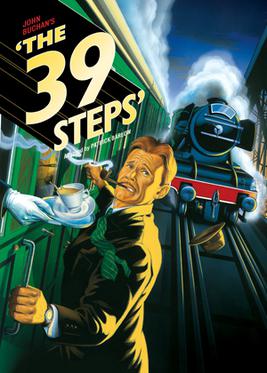
Early Thrillers: One of the earliest Thrillers was Safety Last which featured a young boy performing a daredevil stunt by the side of a skyscraper. Alfred Hitchcock and Fritz Lang helped shape the modern day thriller genre with the films The Lodger and M. Hitchcock went on to make several other British thriller films in the 30s including The Man Who Knew Too Much, a spy-chase/romantic thriller. and the highly acclaimed 39 Steps which can be viewed online here. The 39 Steps features several scenes where characters are shot and left for dead as well as several chase scenes. At the time this would have shocked audiences as they wouldn't have been used to watching so much violence and intense scenes.

40s: The 40s are when the psychological-thriller sub-genre started gaining popularity. Again Hitchcock played a big role as he directed the Oscar winning film, Rebecca. It is the story of a self-conscious bride who is tormented by the memory of her husband's dead first wife Rebecca. Another popular film from the era is Gaslight by George Cukor which featured a scheming husband plotting to make his wife go insane in order to acquire her inheritance. The film was nominated for seven Oscars, winning two. Other popular thriller films from the area include; The Spiral Staircase (1946), a mute domestic servant (Dorothy McGuire) in a house was terrorized by a serial murderer, thinking she was the next victim. In a thriller starring Orson Welles and Rita Hayworth titled The Lady From Shanghai (1948), a woman, her crippled lawyer/husband and his partner, and an Irish sailor ended up involved in a murder scheme. In Sorry, Wrong Number (1948), an invalid woman (Barbara Stanwyck) overheard a murder plot on the phone – against herself. The Third Man (1949), told the story of a writer (Joseph Cotten) in post-World War II Vienna who found out that his old friend (Orson Welles), a black marketeer, was not dead after all (Source: Wikipedia). The ending scene of Rebecca features a large manor set ablaze and all the characters are struggling to escape, one of them doesn't make it and gets crushed when the floor collapses. A scene like that wouldn't be as shocking as if it was in the 20s or 30s but it was still a very dramatic ending to one of Alfred Hitchcock's most acclaimed films.

50s
In the 50s Alfred Hitchcock made a massive change to the thriller genre by adding technicolour so the films were not in black an white. He also added a touch of glamour to his films by casting "icy blondes" to play the leading roles. His films in that era include, Strangers on a Train, Dial M For Murder, Rear Window, To Catch Thief and Vertigo. The opening scene of Vertigo features a dramatic rooftop chase scene which results in the death of a policeman and the film ends with one of the main characters accidentally falling to their death. This was conventional to the 50s where thriller films were aiming to be as dramatic as possible in order to invoke the biggest emotional response from the audience.
60s
One of the most well known and popular thriller films is ‘Psycho’ which was directed by Alfred Hitchcock and was produced during 1960. This film is a psychological thriller based on the American 1960‘s time period. The film was adapted from the 1959 novel which was written by Robert Bloch also called ‘psycho‘. Both the film and novel are based on the cases on convicted serial killer Ed Gein, this therefore allowed the directors of the film to associate the film with other genres such as horror, drama and mystery, as well as the thriller. Psycho was extremely violent and is credited with being the earliest example of a "slasher" film and one scene features a showering blonde woman suddenly being viciously attacked and repeatedly stabbed until she dies. At first critics weren't sure what to make of the film and it initially received mixed reviews but ended up being critically acclaimed after making $50 million at the box office on an $800,000 budget.

70s + 80s
Thriller films in this era began to edge closer to the horror genre, adding violence to the mix, while still maintaining the clear difference between the two genres Hitchcock played a massive part in the development of the Thriller Genre. The atmosphere in a thriller film is also enhanced through the lighting and use of music. An example of this is from the opening of the film ‘Alien’ by Ridley Scott in 1979. In the opening of this film, the lighting is minimal and dull, this creates the atmosphere of suspense and mystery which links into the thriller genre. The film is famous for it's suspense and the fact the alien remained hidden for the entire first part of the film.

90s to Today
From the 90s onwards. The thriller genre moved even closer towards the horror genre. Films contained more blood, gore and deaths. Also combining codes and conventions of action movies. Instead of re-using plots from old thriller movies, they decided to modernise the plots. They did this by adding plots that involved government conspiracy, terrorism and large world-wide issues.Thrillers from this era include Eden Lake, Captivity and Hostage.


As you can see from this list, the top grossing thriller film of all time is Hannibal which has grossed $165,092,268 in the US. Hannibal is an American crime thriller directed by Ridley Scott and is actually a sequel to The Silence of the Lambs which happens to be the second highest grossing thriller. These two films fit the thriller genre well as they the feature intense storyline, graphic violence and creepiness which appeals to the young adults these films are usually aimed at.

The film Seven also managed to gross over $100,000,000 in the US. It was a critical as well as commercial success. The cast had plenty to do with the films success as the film featured award winning performances from Brad Pitt, Morgan Freeman and Kevin Spacey.The plot revolves around a serial killer who carefully plans his murders and links them to the seven deadly sins.

Three films from the Saw series also feature on the list which is no surprise as the series is in the Guinness Book of Records for ‘being The Most Successful Horror Movie Series’. The films themselves are usually rated poorly by critics but that has not stopped the series from grossing over $873 million worldwide. The Saw films are popular due to the high level of adrenaline and tension they create. The plot usually revolves around a group of strangers who end end up trapped in a cruel game where they have to survive or get brutally murdered by one of the many traps.