The scene begins with the first credit introducing the production company, CM Studios. Following this is the establishing shot which is of the entrance to the forest, we see a signpost next to a path leading into the forest. We will then show the next credit which is of the actors and actresses. The next frame is a long shot of the girls walking through the forest, laughing happily, it fades to black when we next see them they are further ahead, this is to show that they have been walking for a while. The next credit is shown which is names the main writer, Jess Day. Then there is a jump cut to when the girls are about to separate and we see the soon-to-be victim, Cathryn, follow a different path. The next credit shows who the film was directed by, me and Charlie Stewart. The credits are white text on a black background.
We then get an over-the-shoulder shot of Cathryn walking down the path texting on her phone. The phone is the iconography featured in this frame and is used to highlight how Cathryn would have been distracted from what was happening around her. The music starts to increase in volume here as this is when the audience first start to think that something is wrong. We then cut to a long shot of Cathryn walking down the path when she hears the sound of a twig snapping and jumps. We see her look around, confused and the music increases slightly in volume. There is then a jump cut to over-the-shoulder shot which shows the antagonist hiding in the bushes watching Cathryn. We see his back and and that he is surrounded by bushes which is why the victim hasn't seen him yet. The eerie music we added is loud here as this is when the audience first see the antagonist and infer that he has evil intentions. Cathryn doesn't see anything strange but we see from her facial expressions that she is still suspicious. She continues walking up the hill until she sees a strange figure at the top of the hill staring at her. There is a long shot of the antagonist standing atop the hill and we will use shallow focus to make him seem like a silhouette and more mysterious.
The antagonist is seen to have his hand in his pocket and we cut to a low angle shot from behind him. The low angle shot makes him look big and threatening. He slowly removes his hand from his pocket and we see that he his holding a knife which is the main mise-en-scene element in our sequence. He twists the knife so that it shines the light which draws the audience's attention towards it. Cathryn freezes in shock, drops her phone, and then runs. The next shot uses panning as Cathryn runs off screen. The final shot shows Cathryn hiding behind a tree as the antagonist slowly approaches her. The screen then fades to black and the movie title appears.
Showing posts with label Planning The Thriller Production. Show all posts
Showing posts with label Planning The Thriller Production. Show all posts
Tuesday, 9 December 2014

Monday, 8 December 2014
Risk Assessment - Miss Georgiou

If we assess the potential risks beforehand we will be able to figure out how we can stop them from happening or how to stop them being a problem. Now that we have assessed the potential risks we know what we need to do to ensure the filming process goes smoothly.
Thursday, 4 December 2014
Group Storyboard - Miss Miller

We had all created our own individual storyboards but as we only needed one final design we took the best ideas from each storyboard. Charlie's storyboard was the most detailed so we based it on his version. An example of a shot we took from Charlie's storyboard is the over the shoulder shot which shows the antagonist hiding behind bushes and we see the victim move past. This was a good shot as it shows how the antagonist is hidden as well as his view of the victim and the audience infer that he has evil intentions. This makes the audience scared for the girl and they are on edge wondering what will happen next. This is conventional as thrillers often make the audience worry about an innocent female character before they inevitably get killed.
The sequence begins with an establishing shot of the entrance to the forest. This was from my storyboard and I included it due to what I learnt about establishing shots in my cinematography research and how they set the scene and inform the audience of where the scene is taking place. It ensures the audience aren't distracted as they wonder where the scene is taking place and they can just focus on the film. Another idea we added is a handheld shot of Cathryn walking through the forest on her phone. This was from Jess' storyboard and we decided to include it as it increases realism and shows the audience that Cathryn started off happy and oblivious and only started to panic later on in the scene when we see the antagonist hiding. A shot we all featured in our individual storyboards is a mid shot of the antagonist hiding in the bushes with a knife in his hand. We all decided it was good to add this as it shows the audience that the antagonist intends to cause harm and as they know Cathryn won't be able to defend herself they feel sympathise and are scared for her as she is presented as innocent so the audience want her to live. Shots like this are conventional to thriller films as they are good way to create a sudden sense of panic.
While planning the storyboard we took a lot of inspiration from the Scream films. The series is famous for it's use of female victims and antagonists with hidden identities. This inspiration is evident in out storyboard when we have the low angle shot of the antagonist where his face is hidden and he slowly reveals a knife.
I think our group storyboard is successful as we managed to get the best ideas from the three individual plans without any issues. Even though our individual plans were decent there was room for improvement and by working together we ended up with a much better plan that is even more conventional to the thriller genre.
Friday, 28 November 2014
Film Schedule


We followed some of the schedule but ran in to quite a few problems. We followed the order of the shots but we weren't able to get them all done on the days listed as we had lighting issues when it got too dark for us to continue filming. We had to go back twice to get all the filming finished.
Group Planning
In my group are Jessica Day and Charlie Stewart and we all have to have regular group meetings and updates. This is very good for our group as it allows us to share our ideas about the opening sequence and other tasks. We can discuss together the best way sot make out film conventional to the thriller genre. We also have group discussions whenever someone wants to change something and we decide whether or not it's a good idea. We talk about the best way we can incorporate these ideas into our film and how we can explore different micro elements we can incorporate into our film.
In our first meeting we discussed the narrative. We had all created our own individual narrative ideas and the we discussed which one we should base our film on. We decided that Charlie's would be too difficult to film and that mine was overly complex and too much to fit into an opening sequence. We then came to the conclusion that if we made some changes to Jess' idea it would be the most conventional as well as being the easiest to film as it was all set in one location. We decided to get rid of the "game" aspect and just make it so the antagonist targeted one victim. We didn't discuss inspirations much in our first meeting but me and Charlie agreed that our favourite thriller was Se7en and we liked the way the antagonist was presented. We also realised that after we changed Jess' narrative it had several similarities with the Scream film series.


In our first meeting we discussed the narrative. We had all created our own individual narrative ideas and the we discussed which one we should base our film on. We decided that Charlie's would be too difficult to film and that mine was overly complex and too much to fit into an opening sequence. We then came to the conclusion that if we made some changes to Jess' idea it would be the most conventional as well as being the easiest to film as it was all set in one location. We decided to get rid of the "game" aspect and just make it so the antagonist targeted one victim. We didn't discuss inspirations much in our first meeting but me and Charlie agreed that our favourite thriller was Se7en and we liked the way the antagonist was presented. We also realised that after we changed Jess' narrative it had several similarities with the Scream film series.
We were given several A3 sheets of paper and given the task of planning out each part of our sequence and what techniques we will use. We separated each sheet into four sections and in each section we focused on a different part of our sequence. On the first section we planned mise-en-scene and what mise-en-scene elements we would feature in our film. We decided that for iconography our antagonist would be armed with a knife which is a conventional murder weapon in thriller films. We also decided to use low key lighting and have the victims wearing light clothes and the antagonist wearing black, representing good vs evil. We decided to set out film in a forest as it is a dark, eerie and isolated location which makes the on-screen characters and the audience all feel uneasy.
In the next meeting we discussed cinematography. We looked at what shots and angles we could use and how we could use them to improve the look and feel of our sequence. We all instantly agreed that we should feature shaky handheld camera movements to portray to the audience the fear and panic the victim is feeling. We also decided that we should have a high angle shot of the victim walking alone through the forest to highlight how isolated and vulnerable she is. We decided that when the antagonist is in the frame we should use low angle shots to make him appear more threatening and powerful.
The next meeting was all about the soundtrack. I came up with the idea of having off screen sound of crunching leaves and branches being broken to suggest to the victim and to the audience that the victim may be being followed. We all decided that this was a good idea as it increases tension and creates panic. We will use parallel sound of the victims heavy breathing which shows the audience that she is as scared as they would expect her to be and sympathize.
Tuesday, 25 November 2014
Individual Storyboard - Miss Miller
Storyboards are used to get the narrative down on paper in a way which illustrates what shots will be used and what will be seen in each shot. They are made by the director and writers of the film and are used as a plan for the directors and camera crew so they know what they are filming. Without a storyboard the filming process would be much less efficient as the director and camera crew would not have an exact idea of what shots they need to get and what they are supposed to look like.
Me, Charlie and Jess all created our own individual storyboards before using them to create one group storyboard. The purpose of this was to see what ideas we all had for shots and how they should be sequenced. We then took the best ideas from each storyboard and combined them to create the final version. If we didn't all create individual storyboards beforehand we would have had less unique ideas to choose from when creating our final version. I hoped my individual storyboard would help create the final version as I tried to think differently as it meant we had more variation in the ideas we had to choose from and were then able to choose what was most suitable.
 The first frame is just white text on a black background and it is the first credit, introducing our production company. We learnt during our opening credits analysis that it is conventional for the production company to be introduced first. The next frame is an establishing shot from just outside the forest which shows the entrance as well as the sign which reads "Epping Forest". This is used to let the audience know where the opening sequence is set. I learnt about establishing shots in my research into cinematography. Without this shot the audience would be left wondering where the characters are instead of getting engrossed in the film. The next two shots are there to set the scene as we see four girls walking through the forest happily as they are heard laughing. This is to emphasize the the equilibrium the film starts in. I decided to add this as it follows Todorov's narrative theory which I learnt about while planning narrative ideas. The next four frames focus on one of the girls separating form her friends and how isolated she ends up being. We use a slow zoom out to a long shot in order to enhance the sense of isolation and the only sound heard is diegetic background noises and the wind rustling. Frames 9-12 focus on the increasing sense of dread and eeriness as characters start to get the feeling that something is wrong. We see the girl start to worry as her phone battery dies and she starts noticing strange sounds and rustling noises, she starts to become paranoid that she is being watched. We see her friend's body language noticeably change and become less relaxed when their friend stops texting. In frame 13 we are back with the soon-to-be victim and we notice someone watching her from a hiding place in the shadows. We see light shine on a knife he is holding. This is when the audience become scared and worried for Cathryn, our victim. The screen then quickly fades to black and the next credits appear which say "Directed by - Ryan Samuels & Charlie Stewart". This is is inspired from Se7en which I analysed above, I noticed that the credits were cut between different parts of the opening sequence so decided to do this in my storyboard. The final frame is when the screen fades to black and the title appears. I added this last for dramatic effect but it adds the unwanted effect of making the opening sequence more "trailer-like".
Even though my storyboard has room for improved and the sketches were awful I made sure it included some of the conventions we have been studying and matched the thriller genre. We don't want the opening sequence to be too similar to a trailer so we will most likely rearrange the order of the credits. I also didn't credit all the people involved in the film like the actors. This would have to be remedied with extra frames. I think ym individual storyboard will help my group as I made sure it sure it included some important conventions like starting with the production company and an establishing shot. Some of the more unique ideas I included give us extra options when we create the final version of the storyboard.
Me, Charlie and Jess all created our own individual storyboards before using them to create one group storyboard. The purpose of this was to see what ideas we all had for shots and how they should be sequenced. We then took the best ideas from each storyboard and combined them to create the final version. If we didn't all create individual storyboards beforehand we would have had less unique ideas to choose from when creating our final version. I hoped my individual storyboard would help create the final version as I tried to think differently as it meant we had more variation in the ideas we had to choose from and were then able to choose what was most suitable.
Even though my storyboard has room for improved and the sketches were awful I made sure it included some of the conventions we have been studying and matched the thriller genre. We don't want the opening sequence to be too similar to a trailer so we will most likely rearrange the order of the credits. I also didn't credit all the people involved in the film like the actors. This would have to be remedied with extra frames. I think ym individual storyboard will help my group as I made sure it sure it included some important conventions like starting with the production company and an establishing shot. Some of the more unique ideas I included give us extra options when we create the final version of the storyboard.
Sunday, 23 November 2014
Planning Opening Credits Miss Geogiou
The style of the credits also matches the theme of the film. The font appears like it was roughly handwritten as it is jagged and looks etched. The credits also stutter and jerk. This creates a jarring effect which creates a sense of unease as well as representing the antagonist unpredictable and erratic nature. The credits are also where we are introduced to the antagonist as in every shot we see movement and the hand belonging to the antagonist. We see him scribbling in old looking books and we also see him holding several sharp blades. Along with the odd passages of texts and the crossed out faces the antagonist is presented as evil and insane.
The opening credits are conventional to the thriller genre. Low key lighting is used to make the sequence more eerie and tense. During the sequence we see someone writing strange text and crossing out people's faces on photographs. This creates an enigma as the antagonists identity is not revealed so the audience are left wondering who he is and what he is up to as it looks like he is planning something.
I also analysed the order in which the credits were shown. The production company was first, followed by the director and some of the more recognisable actors like Brad Pitt and Morgan Freeman. This raises the audience interest as they are likely to recognise a name they see and expect quality.For example they may like other films made by the production company or they could be a fan of Morgan Freeman's Other films and be interested in seeing him in this role.

My design was the the least suitable out of the design in out group. I went with the white text on a black background theme as I knew it was conventionally for thrillers but the text font was basic. I was very new to Final Cut Pro and struggled to find a better and more suitable font choice. The off centre positioning of my credits is conventional as the credits are rarely shown at the centre of the screen. If I was to create another opening sequence I would make sure I knew how to use that part of the program so I would be able to use a more interesting and unique font choice and possibly use other techniques to make my credits look less basic and amateur and more professional.

This is my group member Charlie Stewarts opening credit. He also went with the white text on black background theme. While his credits were also basic they were better than mine as his font choice was slightly more unique and suitable for our film. In the frame shown above there is a spelling mistake/typo which is very unprofessional and would have had to be fixed if we planned on using his opening credits for our film. His credits also featured a shape in the bottom left corner which has no relevance to our film and and doesn't add anything.

Above is Jessica Day's opening credits and it looks the most professional and matches the theme of our film the best. To make it conventional she also opted to go with white text on a black background. The font she chose to use matches the the theme of our film and looks more authentic and less like a standard computer font. her text is also larger and more bold making it stand out more. Her idea is more conventional as the untidy and bold font matches the erratic and disturbed nature of our antagonist.
Jessica's idea is the one we will work on as it is the most suitable for our film. The credits will begin with the name of our production company, the names of our actors, our names and then last will be the title of our film. We feel like this order is best as the title of our film being the last credit is the most dramatic.
Wednesday, 19 November 2014
Planning Characters - Miss Miller

Characters are one of the most important parts of the narrative. They are used to lead the plot and evoke emotional responses for the audience. In order for the audience to become interested in the narrative they need characters they can relate to and care for. Without any relatable characters the audience would struggle to become emotionally engaged within the film and would quickly lose interest. Many films include an audience surrogate which is a character that shares the questions and confusions of the audience so when things are explained to this character they are also being explained to the audience.
The main character in our opening sequence is Cathryn the soon-to-be victim. Cathryn is a 16 year old, white female. She is a conventional thriller character as she is presented as innocent and the audience care for her as she is shown to have her whole life ahead of her. Having the victims not presented as innocent would mean the audience would struggle to sympathise with them so the sequence would be lens tense and engaging. The victim is also a typical teenager which makes it easier for the audience to relate to her. She will be wearing white/light clothing as this emphasises her innocence.
The antagonist in our opening sequence never has his identity revealed which adds to the mystery and creates a sense of enigma. Our antagonist is conventional to psychological thrillers as he is shown to be deranged and mentally unstable. Our sequence also has horror elements and our antagonist is partly inspired by the masked killers in the Scream series of films. The audience see that our antagonist is deranged and fear for Cathryn as the antagonist is shown to be capable of anything. The antagonist is essential to the plot as the story revolves around him capturing on of girls and he's the person who creates the disequilibrium. He will be wearing dark clothing as this is associated with darkness and evil.
The only other characters are the victims friends who presented as typical teenagers who are worried for their friend and want to find her. There is no main protagonist in the film but these girls are who the audience root for as they also want Cathryn to be saved.
Even though most thrillers feature a main protagonist the characters we do have are very conventional. I think the large contrast between the victim and the protagonist is what emphasises the thriller aspect of our film as well as the good vs evil theme it creates. This will improve our film as getting the audience to side with a character ensures they become invested in the film and will found it engrossing as opposed to boring. Planning the characters was helpful as we now know how we want to present them which makes the rest of the film creation process easier. This planning will help us with the camerawork and editing as we can use some angles and shots to present the characters differently.
Monday, 17 November 2014
Planning Editing Styles - Miss Georgiou
Editing is one of the most important aspects of filmmaking. It's important to feature different editing styles in films as it helps keep them interesting and engaging. Good usage of editing in thrillers makes the film much much more suspenseful or scary depending on the type of film. Without using different editing styles the films would be much less entertaining as the film would be the same pace the whole time without any slow, tense moments and fast, exciting parts.
At the start of the opening sequence we will utilize slow editing. Slow editing is when each shot lasts longer and there are less shot changes. We are using this at the start of our opening sequence to build tension and to raise suspicion as the audience think things are too calm and that something will soon go wrong. This is conventional as the slow, eerie beginning later contrast the frantic panic and fear. This gets the audience to care for the characters early on as they worry about what might soon go wrong.
We will also make sure that we use the timing of shots to our advantage in order to make our sequence more engaging. After the antagonist is spotted by the victim the timing of shots will increase. This is to emphasize the feelings of panic the victim is feeling and the quick change in tempo is to make our fiom exciting. The faster pace will create adrenaline and also make the audience panic as they are scared for the victim and hope she survives even though they doubt she will. Suddenly increasing the speed of the shots is used in the majority of films to keep the audience excited as they can lose interest if the film move alongs at just a constant steady pace. Thriller films often consist of slow suspenseful scenes which are interrupted by sudden dramatic parts where the timing of shots suddenly increases.
At the end of the sequence we will have the screen fade to black and then display the movie title. This will signal the end of the opening sequence will maintaining a sense of enigma as the audience have not yet found out what has happened to Cathryn, a character they have been made to care about. The audience will still be full of adrenaline after the recent increase in tempo so they will now be engaged in the film and interested in watching the rest of it as they want to know what happened to her. This is conventional as many thrillers aim to create a sense of enigma that runs throughout the whole film in order to keep the audience engrossed.
Sunday, 16 November 2014
Planning Sound - Miss Miller
The way sound is used in films can have a large impact on it's quality. It is used to make the film more engaging, emphasise key points and make it easier to understand what is happening. Good usage of sound in thriller films increases the suspense and tension. It is important to plan how you will use sound as this allows you to work out the different techniques you can use and the impact it has on the audience. You can then work out how you can bring all these techniques together to create an atmospheric and engaging sequence.

The first sound technique we decided to use was silence. We are going to use this after one of the girls separates from her friends and walks alone. There may be some quite sounds coming from the forest but all the characters will be silent. This is to enhance the sense of isolation and loneliness. The silence shows that Cathryn is completely isolated and alone and the audience infer from this that there is nobody around to help her so she is in more danger. The eerie silence also increases tension. The audience relate to her as they to are put on edge by the eerie silence so they share the same feelings as the victim. This is conventional as thriller films often have eerie silent parts that raise tension and builds up up to something sudden and dramatic.
We are also going to make use of off-screen sound. This will also be when Cathryn is alone walking through the forest. The sounds will be of leaves rustling and branches breaking. We won't see this on the screen therefore it's off screen sound. Neither the audience nor Cathryn know what is making these noises so they are both in the dark. Our usage of off screen sound will also make the audience more engaged as they will be focussing on the surroundings trying to see if they can spot anything suspicious. This is conventional as it creates a sense of enigma as the audience is wondering what could possibly be hiding in the forest. It is conventional for thrillers to use off screen sound to make the audience and characters feel uneasy as it gets the audience engaged in the film.
Non Diegetic sound is sound which is not part of the on screen story and is intended for the audience. Examples of this are soundtracks, narration and sound effects added for dramatic effect. We will include non-diegetic sound as we will have an eerie soundtrack playing throughout the scene. This increases tension as it suggest to the audience that the girls peace and happiness won't last long and that something bad will happen. We will also feature sudden dramatic sound effects when the antagonist is spotted to shock the audience and make them jump which is what many thrillers aim to do. During my research into sound I learned how important the soundtrack is for engrossing the audience and increasing tension. It's conventional for thrillers to feature eerie soundtracks as they usually suit the theme of the film.
Parallel sound is when the sound you hear matches what you see on the screen. We are going to use this after Cathryn panics when she sees a scary looking dark figure in the distance. As we see her panic the audience will be able to hear her sudden heavy breathing. This makes the scene more realistic and the audience worry for her as they see and hear how scared she is. This is conventional as the victims fear is always emphasized in thriller films as it makes the audience more sympathetic and it makes the antagonist appear more scary and threatening.
To conclude I think these techniques will make our film better as they all work together to make a more engrossing and engaging sequence. without these techniques our film wouldn't be as exciting and the audience would struggle to be engaged and care for any of the characters. The techniques we are using are conventional as thriller films often use eerie music and and off screen sound to increase tension which we are doing. Planning this out has helped as we now know exactly what sounds we need to record when we are out filming and what sounds we need to add in afterwards during the editing stage.
Wednesday, 12 November 2014
Planning Cinematography - Miss Miller

 Handheld shots are filmed with the camera being held by hand, without the use of a tripod. It is often used to make the audience feel as though they are part o
f a scene, rather than viewing it from a detached, frozen position. We are going to use this after the victim is alone in the forest and starts to get scared. We are using this to make the audience share the victims fear as they may be able to relate to being scared of dark forests so making it seem like they are part of the scene will make them bond with the victim and become more emotionally attached to her. This is a common method of getting the audience engrossed into the film.
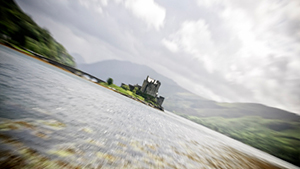 Canted angles are when the camera is tilted. We will feature this from the point of view of the antagonist as he watches the victim. Canted angles suggest imbalance and mental instability, we are using this as our target audience research told us that our audience prefer thrillers with psychological elements. Canted angles are commonly featured in horror films and while we are making a thriller we want our opening sequence to be shocking and scare the audience.
 A low angle shot is when the camera is low and faces upwards towards the focus of the shot. We are going to have a low angle shot of the antagonist as it makes him appear bigger and more powerful thus making the audience worry as they know he has evil intentions. We are also going to have a contrasting high angle shot of the victim alone in the forest. This will make her look weak and vulnerable in comparison which makes the audience worry as they don't believe she has a chance against the powerful antagonist. This is conventional as the antagonist is always portrayed as much more powerful than the victims and the only one who can stop him is the protagonist of the film.
 Point-Of-View shots are when what is shown on the screen is supposedly from the perspective of one of the characters, this puts the audience in their shoes. We are going to have a POV shot from the perspective of the victim during her paranoia as she focuses on all the shadows around her and starts hearing noises. We are doing this to emphasize how scared she is and also engage the audience as they join her in trying to spot anything suspicious. Thriller films often have shots from the victims point of view as a way to make the audience share the same fear as the victim. This makes them care about the film more as they want to see the antagonist defeated.
 A long shot is from far away enough that several characters and some of the background can be seen. We are going to have a long shot at the start of the scene when all the girls are together walking through the forest. This is going to emphasize how everything started in equilibrium as we will see the girls laughing and chatting happily with relaxed body language. The audience know this equilibrium won't last long but it's conventional for thrillers to start this way as many follow Todorov's narrative theory and in our film the equilibrium is disrupted by the antagonist.
To conclude I think that our opening sequence will be successful as we use conventional thriller techniques to accomplish our main goal of getting the audience engrossed in the film during the opening sequence so they are interested in watching the rest of the film. This planning is helpful as we now know exactly what shots we need to get when we go out and film our opening sequence.
Tuesday, 11 November 2014
Planning mise-en-scene
Setting & Iconography
For our setting we will be using an isolated forest as the audience will know that it is unlikely someone else will come to help. Havering-Atte-Bower and Epping are potential filming location as they are secluded locations. It will be seen throughout the whole opening sequence as we only have one setting for our opening sequence. Dark, eerie forests are often featured in thriller films as the lack of vision combined with scary noises make the audience worry for the victim as they know she is far from help and wonder what could be in the hiding shadows. The audience can also relate to times when they've been in a similar situation at night and they remember how they were scared . People usually feel closer to characters whose emotions they understand.
The first iconography element in our film is the victim's phone. She will start using it after leaving her friends and she will be seen texting, happy and unaware. The phone is used to emphasize how happy and oblivious the girl is at first and how this slowly changes until her happiness has been fully replaced by fear. At first we see the texts on the girls phone, then as she ventures further into the forest her phone loses signal, this is when she realises how isolated she is and starts hearing strange noises. This conventional to thrillers as the victim is usually happy and oblivious to the danger they are in until they slowly become more and more scared.
Another iconography element is the torch the protagonist is equipped with. Throughout the scene it is shown to be hanging on the antagonists belt. This is used to make him more fearful as it is implied that the antagonist has come researched and could already have a plan for what he's going to do to the victim. The audience are left to worrying about what the torch is planned to be used for and why it would be so dark a torch was needed. He is also shown to be equipped with a knife which glistens when the light shines on it. Knives are commonly associated with stabbing and murder. The sight of this should make the audience feel sympathy towards the girl as they know what will most likely happen to her. Knives are commonly featured in thriller films as the antagonist has to get close to the victim to use it and having the antagonist use it to kill looks brutal and makes the audience flinch.
Lighting & Colour
Our sequence is set at night so the lighting will mostly be low key and visibility will be low. We are going to try and use the limited lighting to take advantage of all the shadows and emphasize these in order to create an eerie atmosphere. Most people have fears of both the dark, and the unknown, it is conventionally for thriller films to take advantage of this by having characters go to dark, eerie locations like forests or old houses at night. The lack of both brightness and visibility unsettles the audience and is used to create a tense atmosphere.
Costume
Our antagonist will be wearing dark clothing which makes him blend in with the darkness as well as obscuring his face and hides his identity. We are keeping his identity hidden as our research showed that our target audience prefers this. His clothing will be black simply because it's the colour mostly associated with evil.
The victim will be wearing white/light coloured clothing. This is because white is associated with innocence and goodness and this is what our victim is portrayed to be. This contrasts with the antagonist and creates a sense of good vs evil which is conventional as it makes the audience side with and care for the soon-to-be victim as they don't want their side to lose.
Facial Expressions & Body Language
At the start of the scene when all the girls are together they are all smiling and laughing, this emphasizes the state of equilibrium they are in and shows the audience that everything is fine. After the victim loses her phone signal and start noticing sounds is when her expression finally changes and she is seen to be worried and increasingly more scared. Eventually she is seen running to escape the forest faster but she stops dead in her tracks when she sees someone blocking the path ahead and we see pure fear on her face. The antagonist is what disrupts the state of equilibrium and why our story matches Todorov's narrative theory. We then cut to the girls friends who stop smiling and laughing when one of them comments on the fact that their friend stopped replying to her messages. We see that they are trying their hardest not to start worrying but they also start to get scared. Anytime the antagonist is in the shot he seen to be perfectly still. This makes him look cold, focused and more intimidating. This is conventionally as antagonists re often portrayed as psychotic and mentally unstable.
Positioning of Characters
After the girl leaves her friends we will have a high angle shot of her walking down the path. She will be in the middle of the frame and she will appear to be completely surrounded by the forest which emphasizes the fact that there is no escape. She will look small and vulnerable compared to the large dark forest. When the antagonist is in the shot he will be partly obscured and hidden which emphasizes how he his hiding and lurking in the shadows.We want this to be suspenseful with the audience on edge, scared of the antagonist.
Monday, 3 November 2014
Research into Target Audience - Miss Miller
Intro: I carried out my research to help me understand my audience and find out what my audience like to see in thrillers and if I could use this information to tailor my thriller to want my audience want to see. I asked 40 people as it's a big enough amount to get a range of results and ask a range of different people. It's also a big enough sample size to find out what the majority of people are interested in. Now that I know what the majority of my audience are interested in seeing in thrillers I can make sure my thriller includes these things.

The first question was a simple one asking the gender of the participant. We ended up with more males than females but the difference wasn't large so it's most likely due to males being more willing to answer our questionnaire. In hindsight while this information is useful the results won't have much of an impact on our film.

 We asked this question to help us find out what type of thrillers our target audience like to watch. We learnt from this that psychological thrillers are by far the most popular. Psychological thrillers usually feature a mentally unstable antagonist. Using this information we decided we wanted to make the antagonist in our film appear mentally unstable and deranged. As we are only filming the opening sequence we won't be able to go share many details about the antagonist but we can make use of POV shots and canted angles to make the audience feel uneasy about him.

By asking this question we found out that abandoned and secluded locations are the most popular. Abandoned houses was the most popular choice but it would be difficult to find a place like that to film in so we decided to go with the second most popular choice which was dark forests. it will be much easier to find a suitable filming location as there are several forests locally and we can film at night.
 We asked this question to find out what it is our audience like about thriller films so we could include this in our opening sequence and it will appeal to our audience. Our results show that people like thrillers due to the shock and suspense they create as well as all the victims. We had already decided early on that our opening sequence will include a victim but using this information we decided that it was our top priority to put the audience in suspense and then shock them. We include suspense after one of the females separates from the rest by using eerie sounds and slow editing to create a sense of unease, we will then shock the audience when the antagonist is shown.

We wanted to know what type of murder weapon people like to see so we could feature a popular choice and not include unpopular choices. The most common answer was gun so we thought about equipping the antagonist with a gun but decided it didn't go with the theme of our film and that we would be better off featuring the second most popular choice which was knives.

This was a simple question designed to help us plan how much gore would be in our thriller. The large majority of people said that they do prefer gory thrillers and we considered making our thriller gory. We then realised that even though we had a camera and editing software, none of us knew how to make realistic looking gore and we had a very limited budget of £0 so we decided to keep our opening sequence gore free.


This was another simple question we asked to help us decide what gender the victim(s) in our thriller will be. As we expected the majority of people we asked prefer to see females victims so we decided that any victims in our film should be female.

Vox Pops
This research helped us with the planning of our opening sequence. It means we know what our audience is interested in seeing and can adapt our sequence to meet this. It helped a lot with the minor details in our sequence, for example we know to make the victim female and to not reveal the identity of the protagonist. If I was to carry out the research again I'd make sure that all of the questions would help me with my planning and I would try and get more detailed responses.
Wednesday, 22 October 2014
Group Narrative
Group Narrative
In my group is Charlie Stewart and Jessica Day.
Idea 1 - The opening sequence for this narrative would be of the friends walking through the forest, when their friend goes missing and getting the text from the antagonist, the focus would go back and forth from the characters and pictures of the chalk circles and weapons, that could possibly be used. The credits would be written in text font like the phone to show some of the narrative about the antagonist sending them messages. The rules could be being read out so that the audience are aware straight away that there is some sort of game involved.
Advantages - It builds up up suspense which is conventional.
Disadvantages: It's brief and confusing.
Idea 2 - For my thriller film I am going to be base it around a wife who is in a room on her own. The audience see her facial expressions seem depressed at the beginning and she hears noises outside of the room that she is in. The woman opens the door to investigate the noise but doesn't see anything so as she sits back down she sees a silhouette of someone standing there. Then it cuts to black as he walks in the door, we hear struggling noises and then finally silence. Then we see a silhouette walk out then the camera pans to the woman's desk and we see blood all over it.
Advantages - Good use of conventional thriller elements. Creates and enigma.
Disadvantages - Hardest to make.
Idea 3 -Boy and a girl are having a lunch picnic. Girl comments on how glad she is that the boy forgave her for leaving him when he was depressed. Boy looks away and we see a menacing look on his face. Cut to flashback of the boy walking to the edge of the platform at a train station, about to jump but deciding not to at the last minute and we see the train whiz by. Next shot is of the boy talking to a psychiatrist and we hear that the boy often has "dark thoughts" since his mother was driven to suicide by his father, he also mentions how betrayed he felt when his girlfriend left. Cut back to the present, the boy's girlfriend asks him to pass her the apple juice. Then we see the hamper and as the boy moves the apple juice we see a knife. Boy grabs it, screen fades to black, girl screams. The rest of the film would be about the boy seeking revenge on the people he believes to have caused him harm, mentally or physically with his father being his final target . There would be meetings with the psychiatrist throughout.
Advantages: Easy to produce. Good opening that doesn't give away to many plot details. We understand the antagonists motives.
Disadvantages - Doesn't show enough conventions of a thriller.
Group: Based on idea 1 but it will be changed so that it is from the person who gets kidnapped instead as this was would increase sympathy from the audience to the character. We won't find out much about the antagonists intentions, we will just see the friend being kidnapped. We will get of the game idea as it is cliche and would be too much to fit into a short opening sequence. We may show a bit of the killer but not too much as we don't wan't to give away the antagonists identity so early as when we did our research we discovered that most people prefer the antagonists identity to remain a secret.
This idea follows Todorov's narrative theory as everything is in a state of equilibrium when the girls are walking through the forest happily. This gets disrupted when one of them gets kidnapped. The plot then focuses on the girls attempts to restore the initial state of equilibrium by rescuing their friend without all dying horribly. The characters don't match the examples described in Propp's theory and while the narrative meets some of the themes in Aristotle's theory Todorov's is still the best match.
Individual Narrative Ideas - Miss Georgiou
Narrative is important as important as it builds up the storyline and gets the audience engrossed in the film.
Plot: Boy and a girl are having a lunch picnic. Girl comments on how glad she is that the boy forgave her for leaving him when he was depressed. Boy looks away and we see a menacing look on his face. Cut to flashback of the boy walking to the edge of the platform at a train station, about to jump but deciding not to at the last minute and we see the train whiz by. Next shot is of the boy talking to a psychiatrist and we hear that the boy often has "dark thoughts" since his mother was driven to suicide by his father, he also mentions how betrayed he felt when his girlfriend left. Cut back to the present, the boy's girlfriend asks him to pass her the apple juice. Then we see the hamper and as the boy moves the apple juice we see a knife. Boy grabs it, screen fades to black, girl screams.
The rest of the film would be about the boy seeking revenge on the people he believes to have caused him harm, mentally or physically with his father being his final target . There would be meetings with the psychiatrist throughout.
While all the victims would have done harm to the boy in some way they would not be deserving of death and the audience should sympathise with them. The boy would be presented as not cruel, but broken and while the audience should want him to be stopped they should also sympathise with him.
The main mise-en-scene element that I'd like to include is the knife that is suddenly revealed when the main character is with his girlfriend. I'd also like the train to be a prominent part of the sequence as it highlights the boys suicidal thoughts and psychological issues.While I'd prefer the film was a 15 due to the dark themes it would more likely suit an age rating of 18 and be aimed at young adults 18-35, male and female.
I'll email my group members copies of my idea and then we will discuss the positives and negatives including any potential issues.
Monday, 13 October 2014
Opening Sequence Analysis - Miss Georgiou
"How does the opening sequence of the film halloween inform the audience of it's conventions of a thriller"
The opening sequence of thrillers sets up the main theme of the film. It introduces the narrative and sets the tone for the rest of the film so the audience know what to expect. The opening sequence often creates a sense of unease and the tension it builds features throughout the rest of the film. It often ends on something mysterious creating an enigma.
Halloween meets the conventions of a thriller film through it's use of cinematography. The use of a point of view (POV) shot in the opening scene is used effectively. We see what is happening from the view of the antagonist which is strange as we usually see the point of view from the victim. This is means that the identity of the antagonist remains secret and when the mask gets put on we can only see through the eyeholes. This is used to make the audience feel uneasy as their vision is restricted and all they see is the female victim about to be killed and they feel scared for her knowing what will most likely happen. When the female is being stabbed the audience feel disgusted as they have been forced into the position of the murderer. While it is not common to have a POV from the antagonist it is common for thrillers to make the audience feel uneasy and sympathetic towards the victims. The use of a handheld camera is also effective in this scene. Handheld is used throughout the clip but becomes more noticeable when the antagonist is walking up the stairs around 2:15.
 This use of a handheld camera makes the scene appear unstable which mirrors the antagonists state of mind as well as creating a sense of foreboding. Handheld shots are often used in thrillers to make the audience tense and feel a sense of dread. At the end of the scene the image zooms out into a high angle shot of the house and three characters. This shows how shocked the boys parents are as well as emphasising the sense of enigma the audience are left with as they wonder if the boy is guilty and what could drive him to do something so horrible and unnatural.

The use of Narrative in Halloween is typical for a thriller film and is effective as it's full of suspense, surprise, shock and ends on an enigma. This is something nearly all thriller films try to do, therefore it's conventional. The scene is set in an old detached house which is typical for a thriller as many people have a fear of having something unwanted in their house house so may be able to share the same fears with the victims in the films and sympathize with them more. The victim in this scene is a young female which is is conventional for a thriller as young females are usually considered innocent and too weak to protect themselves so the audience feel more scared and worried for them then they would if it was a strong male in danger. it is also conventional that the identity of the killer remains secret until the end of the scene (if the boy actually is the killer). This is typical as lots of people have a fear of the unknown and as the antagonist is not seen the audience have no idea what he's capable of which makes him even scarier. Two pieces of iconography are used in this opening scene which are the knife and the mask. Knives are often the weapon of choice in thriller films as they are often associated with murder and kills with them are done with the killer right besides the victim making it more brutal and personal. Masks are typically used to hide the killers identity creating enigma and making them appear more fearful. Low key lighting is used throughout this scene making it creepier and creating shadows.
Editing in thrillers is primarily used to create suspense and build tension which this film succeeds in. Around the two minute mark the editing is slow as the killer is slowly making his way towards his victim. This slow paced editing is used to maximize the feelings of unease created by the use of a handheld camera and POV from the antagonists perspective and the slower it is the more uncomfortable the audience feel. At 3:45 a straight cut is used to change the viewpoint from the killers POV to a shot of the boy removing his mask. This emphasises the enigma created and shocks the audience as a young, innocent looking boy is implicated to have committed that horrible killing and the actions of the antagonist are not something that would usually be associated with a young boy.
The use of sound in Halloween is also conventional. At the start of the scene there is a non diegetic soundtrack being played. It is non-diegetic as it is not part of the film and was added after in the post production stage. After the opening credits we hear children chanting something which sounds evil, like a curse. This almost makes them sound possesed which complements the supernatural theme implied in the title of the film. Most of the scene is quite so the audience focus in what is happening in the scene and become more engrossed. This is typical for thriller films whereas other genres like action feature loud fast paced music.
The way the characters are represented in Halloween are typical for thriller films. The antagonist is presented as mentally unstable and has his identity hidden which makes him scarier as the audience don't know what he's capable of. The victim is a young female who is unable to protect herself making the audience feel sympathetic. The parents are hardly seen in the the scene but their confused reaction at the end mirrors how the audience feel.
To conclude this opening sequence informs the audience of it's conventions as thriller through the way it succeeds in creating suspense, surprise, shock and tension. My analysis has helped me with my own film as I have learnt how you can use plot twists to create a sense of enigma as well as how POV shots can be used to create tension.
The opening sequence of thrillers sets up the main theme of the film. It introduces the narrative and sets the tone for the rest of the film so the audience know what to expect. The opening sequence often creates a sense of unease and the tension it builds features throughout the rest of the film. It often ends on something mysterious creating an enigma.
The use of Narrative in Halloween is typical for a thriller film and is effective as it's full of suspense, surprise, shock and ends on an enigma. This is something nearly all thriller films try to do, therefore it's conventional. The scene is set in an old detached house which is typical for a thriller as many people have a fear of having something unwanted in their house house so may be able to share the same fears with the victims in the films and sympathize with them more. The victim in this scene is a young female which is is conventional for a thriller as young females are usually considered innocent and too weak to protect themselves so the audience feel more scared and worried for them then they would if it was a strong male in danger. it is also conventional that the identity of the killer remains secret until the end of the scene (if the boy actually is the killer). This is typical as lots of people have a fear of the unknown and as the antagonist is not seen the audience have no idea what he's capable of which makes him even scarier. Two pieces of iconography are used in this opening scene which are the knife and the mask. Knives are often the weapon of choice in thriller films as they are often associated with murder and kills with them are done with the killer right besides the victim making it more brutal and personal. Masks are typically used to hide the killers identity creating enigma and making them appear more fearful. Low key lighting is used throughout this scene making it creepier and creating shadows.
Editing in thrillers is primarily used to create suspense and build tension which this film succeeds in. Around the two minute mark the editing is slow as the killer is slowly making his way towards his victim. This slow paced editing is used to maximize the feelings of unease created by the use of a handheld camera and POV from the antagonists perspective and the slower it is the more uncomfortable the audience feel. At 3:45 a straight cut is used to change the viewpoint from the killers POV to a shot of the boy removing his mask. This emphasises the enigma created and shocks the audience as a young, innocent looking boy is implicated to have committed that horrible killing and the actions of the antagonist are not something that would usually be associated with a young boy.
The use of sound in Halloween is also conventional. At the start of the scene there is a non diegetic soundtrack being played. It is non-diegetic as it is not part of the film and was added after in the post production stage. After the opening credits we hear children chanting something which sounds evil, like a curse. This almost makes them sound possesed which complements the supernatural theme implied in the title of the film. Most of the scene is quite so the audience focus in what is happening in the scene and become more engrossed. This is typical for thriller films whereas other genres like action feature loud fast paced music.
The way the characters are represented in Halloween are typical for thriller films. The antagonist is presented as mentally unstable and has his identity hidden which makes him scarier as the audience don't know what he's capable of. The victim is a young female who is unable to protect herself making the audience feel sympathetic. The parents are hardly seen in the the scene but their confused reaction at the end mirrors how the audience feel.
To conclude this opening sequence informs the audience of it's conventions as thriller through the way it succeeds in creating suspense, surprise, shock and tension. My analysis has helped me with my own film as I have learnt how you can use plot twists to create a sense of enigma as well as how POV shots can be used to create tension.
Subscribe to:
Posts (Atom)