Editing is one of the most important aspects of filmmaking. It's important to feature different editing styles in films as it helps keep them interesting and engaging. Good usage of editing in thrillers makes the film much much more suspenseful or scary depending on the type of film. Without using different editing styles the films would be much less entertaining as the film would be the same pace the whole time without any slow, tense moments and fast, exciting parts.
At the start of the opening sequence we will utilize slow editing. Slow editing is when each shot lasts longer and there are less shot changes. We are using this at the start of our opening sequence to build tension and to raise suspicion as the audience think things are too calm and that something will soon go wrong. This is conventional as the slow, eerie beginning later contrast the frantic panic and fear. This gets the audience to care for the characters early on as they worry about what might soon go wrong.
We will also make sure that we use the timing of shots to our advantage in order to make our sequence more engaging. After the antagonist is spotted by the victim the timing of shots will increase. This is to emphasize the feelings of panic the victim is feeling and the quick change in tempo is to make our fiom exciting. The faster pace will create adrenaline and also make the audience panic as they are scared for the victim and hope she survives even though they doubt she will. Suddenly increasing the speed of the shots is used in the majority of films to keep the audience excited as they can lose interest if the film move alongs at just a constant steady pace. Thriller films often consist of slow suspenseful scenes which are interrupted by sudden dramatic parts where the timing of shots suddenly increases.
At the end of the sequence we will have the screen fade to black and then display the movie title. This will signal the end of the opening sequence will maintaining a sense of enigma as the audience have not yet found out what has happened to Cathryn, a character they have been made to care about. The audience will still be full of adrenaline after the recent increase in tempo so they will now be engaged in the film and interested in watching the rest of it as they want to know what happened to her. This is conventional as many thrillers aim to create a sense of enigma that runs throughout the whole film in order to keep the audience engrossed.
Monday, 17 November 2014

Sunday, 16 November 2014
Planning Sound - Miss Miller
The way sound is used in films can have a large impact on it's quality. It is used to make the film more engaging, emphasise key points and make it easier to understand what is happening. Good usage of sound in thriller films increases the suspense and tension. It is important to plan how you will use sound as this allows you to work out the different techniques you can use and the impact it has on the audience. You can then work out how you can bring all these techniques together to create an atmospheric and engaging sequence.

The first sound technique we decided to use was silence. We are going to use this after one of the girls separates from her friends and walks alone. There may be some quite sounds coming from the forest but all the characters will be silent. This is to enhance the sense of isolation and loneliness. The silence shows that Cathryn is completely isolated and alone and the audience infer from this that there is nobody around to help her so she is in more danger. The eerie silence also increases tension. The audience relate to her as they to are put on edge by the eerie silence so they share the same feelings as the victim. This is conventional as thriller films often have eerie silent parts that raise tension and builds up up to something sudden and dramatic.
We are also going to make use of off-screen sound. This will also be when Cathryn is alone walking through the forest. The sounds will be of leaves rustling and branches breaking. We won't see this on the screen therefore it's off screen sound. Neither the audience nor Cathryn know what is making these noises so they are both in the dark. Our usage of off screen sound will also make the audience more engaged as they will be focussing on the surroundings trying to see if they can spot anything suspicious. This is conventional as it creates a sense of enigma as the audience is wondering what could possibly be hiding in the forest. It is conventional for thrillers to use off screen sound to make the audience and characters feel uneasy as it gets the audience engaged in the film.
Non Diegetic sound is sound which is not part of the on screen story and is intended for the audience. Examples of this are soundtracks, narration and sound effects added for dramatic effect. We will include non-diegetic sound as we will have an eerie soundtrack playing throughout the scene. This increases tension as it suggest to the audience that the girls peace and happiness won't last long and that something bad will happen. We will also feature sudden dramatic sound effects when the antagonist is spotted to shock the audience and make them jump which is what many thrillers aim to do. During my research into sound I learned how important the soundtrack is for engrossing the audience and increasing tension. It's conventional for thrillers to feature eerie soundtracks as they usually suit the theme of the film.
Parallel sound is when the sound you hear matches what you see on the screen. We are going to use this after Cathryn panics when she sees a scary looking dark figure in the distance. As we see her panic the audience will be able to hear her sudden heavy breathing. This makes the scene more realistic and the audience worry for her as they see and hear how scared she is. This is conventional as the victims fear is always emphasized in thriller films as it makes the audience more sympathetic and it makes the antagonist appear more scary and threatening.
To conclude I think these techniques will make our film better as they all work together to make a more engrossing and engaging sequence. without these techniques our film wouldn't be as exciting and the audience would struggle to be engaged and care for any of the characters. The techniques we are using are conventional as thriller films often use eerie music and and off screen sound to increase tension which we are doing. Planning this out has helped as we now know exactly what sounds we need to record when we are out filming and what sounds we need to add in afterwards during the editing stage.
Wednesday, 12 November 2014
Planning Cinematography - Miss Miller

 Handheld shots are filmed with the camera being held by hand, without the use of a tripod. It is often used to make the audience feel as though they are part o
f a scene, rather than viewing it from a detached, frozen position. We are going to use this after the victim is alone in the forest and starts to get scared. We are using this to make the audience share the victims fear as they may be able to relate to being scared of dark forests so making it seem like they are part of the scene will make them bond with the victim and become more emotionally attached to her. This is a common method of getting the audience engrossed into the film.
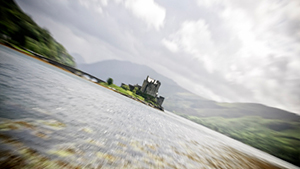 Canted angles are when the camera is tilted. We will feature this from the point of view of the antagonist as he watches the victim. Canted angles suggest imbalance and mental instability, we are using this as our target audience research told us that our audience prefer thrillers with psychological elements. Canted angles are commonly featured in horror films and while we are making a thriller we want our opening sequence to be shocking and scare the audience.
 A low angle shot is when the camera is low and faces upwards towards the focus of the shot. We are going to have a low angle shot of the antagonist as it makes him appear bigger and more powerful thus making the audience worry as they know he has evil intentions. We are also going to have a contrasting high angle shot of the victim alone in the forest. This will make her look weak and vulnerable in comparison which makes the audience worry as they don't believe she has a chance against the powerful antagonist. This is conventional as the antagonist is always portrayed as much more powerful than the victims and the only one who can stop him is the protagonist of the film.
 Point-Of-View shots are when what is shown on the screen is supposedly from the perspective of one of the characters, this puts the audience in their shoes. We are going to have a POV shot from the perspective of the victim during her paranoia as she focuses on all the shadows around her and starts hearing noises. We are doing this to emphasize how scared she is and also engage the audience as they join her in trying to spot anything suspicious. Thriller films often have shots from the victims point of view as a way to make the audience share the same fear as the victim. This makes them care about the film more as they want to see the antagonist defeated.
 A long shot is from far away enough that several characters and some of the background can be seen. We are going to have a long shot at the start of the scene when all the girls are together walking through the forest. This is going to emphasize how everything started in equilibrium as we will see the girls laughing and chatting happily with relaxed body language. The audience know this equilibrium won't last long but it's conventional for thrillers to start this way as many follow Todorov's narrative theory and in our film the equilibrium is disrupted by the antagonist.
To conclude I think that our opening sequence will be successful as we use conventional thriller techniques to accomplish our main goal of getting the audience engrossed in the film during the opening sequence so they are interested in watching the rest of the film. This planning is helpful as we now know exactly what shots we need to get when we go out and film our opening sequence.
Tuesday, 11 November 2014
Planning mise-en-scene
Setting & Iconography
For our setting we will be using an isolated forest as the audience will know that it is unlikely someone else will come to help. Havering-Atte-Bower and Epping are potential filming location as they are secluded locations. It will be seen throughout the whole opening sequence as we only have one setting for our opening sequence. Dark, eerie forests are often featured in thriller films as the lack of vision combined with scary noises make the audience worry for the victim as they know she is far from help and wonder what could be in the hiding shadows. The audience can also relate to times when they've been in a similar situation at night and they remember how they were scared . People usually feel closer to characters whose emotions they understand.
The first iconography element in our film is the victim's phone. She will start using it after leaving her friends and she will be seen texting, happy and unaware. The phone is used to emphasize how happy and oblivious the girl is at first and how this slowly changes until her happiness has been fully replaced by fear. At first we see the texts on the girls phone, then as she ventures further into the forest her phone loses signal, this is when she realises how isolated she is and starts hearing strange noises. This conventional to thrillers as the victim is usually happy and oblivious to the danger they are in until they slowly become more and more scared.
Another iconography element is the torch the protagonist is equipped with. Throughout the scene it is shown to be hanging on the antagonists belt. This is used to make him more fearful as it is implied that the antagonist has come researched and could already have a plan for what he's going to do to the victim. The audience are left to worrying about what the torch is planned to be used for and why it would be so dark a torch was needed. He is also shown to be equipped with a knife which glistens when the light shines on it. Knives are commonly associated with stabbing and murder. The sight of this should make the audience feel sympathy towards the girl as they know what will most likely happen to her. Knives are commonly featured in thriller films as the antagonist has to get close to the victim to use it and having the antagonist use it to kill looks brutal and makes the audience flinch.
Lighting & Colour
Our sequence is set at night so the lighting will mostly be low key and visibility will be low. We are going to try and use the limited lighting to take advantage of all the shadows and emphasize these in order to create an eerie atmosphere. Most people have fears of both the dark, and the unknown, it is conventionally for thriller films to take advantage of this by having characters go to dark, eerie locations like forests or old houses at night. The lack of both brightness and visibility unsettles the audience and is used to create a tense atmosphere.
Costume
Our antagonist will be wearing dark clothing which makes him blend in with the darkness as well as obscuring his face and hides his identity. We are keeping his identity hidden as our research showed that our target audience prefers this. His clothing will be black simply because it's the colour mostly associated with evil.
The victim will be wearing white/light coloured clothing. This is because white is associated with innocence and goodness and this is what our victim is portrayed to be. This contrasts with the antagonist and creates a sense of good vs evil which is conventional as it makes the audience side with and care for the soon-to-be victim as they don't want their side to lose.
Facial Expressions & Body Language
At the start of the scene when all the girls are together they are all smiling and laughing, this emphasizes the state of equilibrium they are in and shows the audience that everything is fine. After the victim loses her phone signal and start noticing sounds is when her expression finally changes and she is seen to be worried and increasingly more scared. Eventually she is seen running to escape the forest faster but she stops dead in her tracks when she sees someone blocking the path ahead and we see pure fear on her face. The antagonist is what disrupts the state of equilibrium and why our story matches Todorov's narrative theory. We then cut to the girls friends who stop smiling and laughing when one of them comments on the fact that their friend stopped replying to her messages. We see that they are trying their hardest not to start worrying but they also start to get scared. Anytime the antagonist is in the shot he seen to be perfectly still. This makes him look cold, focused and more intimidating. This is conventionally as antagonists re often portrayed as psychotic and mentally unstable.
Positioning of Characters
After the girl leaves her friends we will have a high angle shot of her walking down the path. She will be in the middle of the frame and she will appear to be completely surrounded by the forest which emphasizes the fact that there is no escape. She will look small and vulnerable compared to the large dark forest. When the antagonist is in the shot he will be partly obscured and hidden which emphasizes how he his hiding and lurking in the shadows.We want this to be suspenseful with the audience on edge, scared of the antagonist.
Tuesday, 4 November 2014
Inspirations - Miss Georgiou
The first sequence I analysed was from the film Se7en. I was inspired by how dramatic and tense the ending scene was as well as how scary and smart the antagonist was shown as. The film was unpredictable and the audience were on edge throughout. In my own film I want to be as effective at creating tension and having the audience on edge throughout. When creating my film I will try to make the antagonist as scary as possible. During this end scene the background is simple and out of focus which brings all the audience attention to the characters body language and facial expressions, this is technique I may end up using myself. The protagonist in the scene is distressed and we see that he is struggling to control his emotions and is unsure what to do. This puts the audience on edge as they sympathise with the protagonist and are also unsure what will happen though they hope the protagonist doesn't "lose" which he inevitable does. When creating my film I want my audience to sympathise with my protagonist which makes them more immersed in the film as they care what happens.
Another film I took inspiration from is Zodiac, also directed by David Fincher. I took inspiration from the shock and fear the audience feel during this film. The first part of the scene creates a sense of unease as the audience are sure the antagonist is the Zodiac killer and the victim is going to be the attractive female who also has a baby with her. The whole part where the man is fixing the wheel is tense and when he leaves without harming her there's a sense of relief. Then he comes back and the audience fear the worse and are in shock when he exclaims "I'm going to throw your baby out the window". This kind of tension and impact on the audience is what I want to do in my film. The tempo of the soundtrack changes several times during the scene reflecting on how threatening the man is. This has inspired my use of sound in my sequence as I know how I can use the background music to create a sudden sense of panic.
The film my characters take the most inspiration from is Scream. All the killers in the Scream film wear a white mask and black clothing and have their identity hidden. This makes them more unnerving and makes the audience uneasy as they know someone who would go as far as to wear an eerie looking costume must have serious psychological problems and be more the be
more than willing to cause harm to characters the audience have been made to care about. In my film I decided I wanted the antagonist to be scary and unsettling so I decided to make him wear all dark clothes and keep his identity secret. My character doesn't wear a mask as this would make the film too similar to Scream but my aim is that his identity make the audience feel uncomfortable when he is in the scene. The victims in the Scream films are usually attractive white females presented as innocent and not deserving of death. This makes the audience side with them and get more engaged in the film as they hope for the characters survival. A main part of the mise-en-scene in the Scream films is the knife the antagonist always use as a weapon. It helped me decide that in my film the antagonist would have a knife as they are often associated with death and evil.
My research helped as it helped me become more knowledgeable on thrillers films and the various techniques used to make them successful. I found lots of small tips and details that I can use to make a better, more engaging and more suspenseful sequence.
Monday, 3 November 2014
Research into Target Audience - Miss Miller
Intro: I carried out my research to help me understand my audience and find out what my audience like to see in thrillers and if I could use this information to tailor my thriller to want my audience want to see. I asked 40 people as it's a big enough amount to get a range of results and ask a range of different people. It's also a big enough sample size to find out what the majority of people are interested in. Now that I know what the majority of my audience are interested in seeing in thrillers I can make sure my thriller includes these things.

The first question was a simple one asking the gender of the participant. We ended up with more males than females but the difference wasn't large so it's most likely due to males being more willing to answer our questionnaire. In hindsight while this information is useful the results won't have much of an impact on our film.

 We asked this question to help us find out what type of thrillers our target audience like to watch. We learnt from this that psychological thrillers are by far the most popular. Psychological thrillers usually feature a mentally unstable antagonist. Using this information we decided we wanted to make the antagonist in our film appear mentally unstable and deranged. As we are only filming the opening sequence we won't be able to go share many details about the antagonist but we can make use of POV shots and canted angles to make the audience feel uneasy about him.

By asking this question we found out that abandoned and secluded locations are the most popular. Abandoned houses was the most popular choice but it would be difficult to find a place like that to film in so we decided to go with the second most popular choice which was dark forests. it will be much easier to find a suitable filming location as there are several forests locally and we can film at night.
 We asked this question to find out what it is our audience like about thriller films so we could include this in our opening sequence and it will appeal to our audience. Our results show that people like thrillers due to the shock and suspense they create as well as all the victims. We had already decided early on that our opening sequence will include a victim but using this information we decided that it was our top priority to put the audience in suspense and then shock them. We include suspense after one of the females separates from the rest by using eerie sounds and slow editing to create a sense of unease, we will then shock the audience when the antagonist is shown.

We wanted to know what type of murder weapon people like to see so we could feature a popular choice and not include unpopular choices. The most common answer was gun so we thought about equipping the antagonist with a gun but decided it didn't go with the theme of our film and that we would be better off featuring the second most popular choice which was knives.

This was a simple question designed to help us plan how much gore would be in our thriller. The large majority of people said that they do prefer gory thrillers and we considered making our thriller gory. We then realised that even though we had a camera and editing software, none of us knew how to make realistic looking gore and we had a very limited budget of £0 so we decided to keep our opening sequence gore free.


This was another simple question we asked to help us decide what gender the victim(s) in our thriller will be. As we expected the majority of people we asked prefer to see females victims so we decided that any victims in our film should be female.

Vox Pops
This research helped us with the planning of our opening sequence. It means we know what our audience is interested in seeing and can adapt our sequence to meet this. It helped a lot with the minor details in our sequence, for example we know to make the victim female and to not reveal the identity of the protagonist. If I was to carry out the research again I'd make sure that all of the questions would help me with my planning and I would try and get more detailed responses.
Sunday, 2 November 2014
Preliminary Task
My group includes me, Jessica Day and Charlie Stewart. The purpose of this preliminary task was to get us some experience using the filming equipment and making sure we understood how to use it before we started filming our opening scene. It was also an opportunity to experiment with different angles and shots. We had to film a simple conversation that started with a character entering the scene and ended with them leaving. We were told to include a long shot, a closeup, tracking shot and a shot reverse shot. The clip didn't have to be too long it just needed to include all the necessary shots. In class we added everything we had filmed into Final Cut Pro and watched them all back. The majority of the clips were unsuitable as some included unwanted background noise and a couple times we said a line incorrectly. Once we had chosen the best shots we used the software to connect the shots and create our sequence, we then published it to YouTube. (https://www.youtube.com/watch?v=8nK1KqlPBhE)
The first shot we used was a long shot, we did this to show Charlie entering the scene from the sixth form area, we then had a tracking shot following charlie on his way to the bench. To film the longshot we used the tripod to set the camera up a good distance away from the door. For the tracking shot we had Jess slowly rotate the camera on the tripod. We had a closeup shot of me using my phone and shot reverse shots during the conversation. For the close up we used the camera to slowly zoom in and the shot reverse shot was created afterwards in Final Cut Pro. We also learned how to set up and use a tripod properly to help keep the camera steady. We filmed our clip quickly and efficiently and managed to finish within the allotted time unlike other groups which worked slowly and spent too much time planning the conversation even though it was supposed to be simple. We worked efficiently as we didn't waste time planning the conversation and we were able to set up the equipment quickly. What we struggled with was finding the right moment to film as we kept getting interrupted by loud noises coming from near our area. We struggled with this due to our choice to film outside instead of inside as there was more free space outside. While filming indoors would eliminate this problem we would have had less room to work with and would probably have had to rush as classrooms and hallways are usually busy. At first we struggled with getting the cameras on the right settings but we soon figured it out.Watching the footage back helped us understand the mistakes we made as it highlighted how noticeable and distracting background noise can be and also how if random people end up in the background during one of the shots it can create continuity errors if that person disappears in the next shot.

This task helped prepare us for filming our opening sequence as we now know how to use the filming equipment properly and will have no problems setting it up in the future. We are also more aware of the potential problems we may face when filming and know to find a secluded area where we are less likely to be interrupted. When filming our opening sequence we need to work as efficiently as we did for this while making sure there are no continuity errors or unwanted sounds. We should check the footage on the camera to make sure it's all good before we start editing.
The first shot we used was a long shot, we did this to show Charlie entering the scene from the sixth form area, we then had a tracking shot following charlie on his way to the bench. To film the longshot we used the tripod to set the camera up a good distance away from the door. For the tracking shot we had Jess slowly rotate the camera on the tripod. We had a closeup shot of me using my phone and shot reverse shots during the conversation. For the close up we used the camera to slowly zoom in and the shot reverse shot was created afterwards in Final Cut Pro. We also learned how to set up and use a tripod properly to help keep the camera steady. We filmed our clip quickly and efficiently and managed to finish within the allotted time unlike other groups which worked slowly and spent too much time planning the conversation even though it was supposed to be simple. We worked efficiently as we didn't waste time planning the conversation and we were able to set up the equipment quickly. What we struggled with was finding the right moment to film as we kept getting interrupted by loud noises coming from near our area. We struggled with this due to our choice to film outside instead of inside as there was more free space outside. While filming indoors would eliminate this problem we would have had less room to work with and would probably have had to rush as classrooms and hallways are usually busy. At first we struggled with getting the cameras on the right settings but we soon figured it out.Watching the footage back helped us understand the mistakes we made as it highlighted how noticeable and distracting background noise can be and also how if random people end up in the background during one of the shots it can create continuity errors if that person disappears in the next shot.
As you can see in the screenshot we ended up with stranger in the background of the shot. We struggled with finding the right time to start the shot without any disruptions. Next time we will make sure we have the area to ourselves before we start filming.
Subscribe to:
Posts (Atom)